In today’s digital landscape, mastering SEO (Search Engine Optimization) is crucial for any business looking to thrive online. For WordPress website owners, optimizing for search engines while adhering to Google’s E.E.A.T (Experience, Expertise, Authoritativeness, Trustworthiness) guidelines can be the golden key to increased visibility and traffic. This comprehensive guide will walk you through the essential steps of SEO for a WordPress website, backed by practical examples and case studies to ensure you get the most out of your efforts.
Understanding Google’s E.E.A.T Guidelines
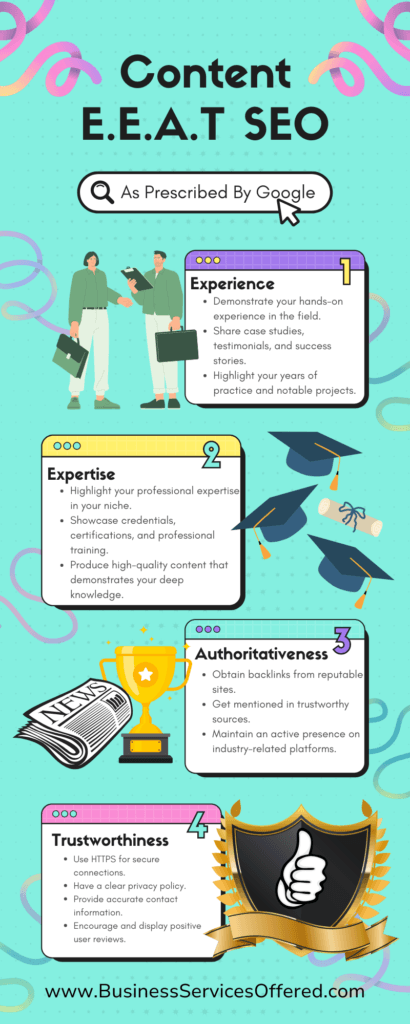
Google’s E.E.A.T guidelines are pivotal for SEO success. They emphasize the importance of:
Experience: Content should reveal the experience of the author concerning the subject matter.
Expertise: Content should be created by knowledgeable and skilled individuals.
Authoritativeness: Your website should be recognized as a go-to source within your industry.
Trustworthiness: Your site should be reliable, safe, and transparent.
1. Showing Your Experience
When crafting blog content, voicing your experience is essential to establish credibility and build trust with your audience. Sharing personal insights, anecdotes, and real-world examples not only demonstrates your expertise but also makes your content more relatable and engaging. By showcasing your knowledge and practical experience, you differentiate yourself from generic sources and provide readers with valuable, actionable advice they can trust and apply. This authentic, authoritative voice is key to fostering a loyal readership and enhancing your brand’s reputation.
2. Establishing Expertise
Keyword Research and Content Creation
To demonstrate expertise, start with thorough keyword research. Use tools like Ahrefs, SEMrush, or Google Keyword Planner to identify relevant keywords with high search volume and low competition.
Example: A health and wellness blog should target keywords like “healthy eating tips” or “yoga for beginners.” Create in-depth, well-researched articles on these topics to showcase your expertise.
Case Study: Healthline’s Success with Google’s E.E.A.T. Principles
Overview: Healthline, a leading health information website, has successfully implemented Google’s E.E.A.T. (Experience, Expertise, Authoritativeness, and Trustworthiness) principles to enhance its SEO performance and establish itself as a trusted source of medical information. By leveraging comprehensive articles written by medical professionals and reviewed by experts, Healthline ensures its content meets the highest standards of quality and reliability.
Key Strategies:
1. Experience
Healthline emphasizes the real-world experience of its medical contributors. The website features detailed author bios, highlighting their clinical experience and expertise in their respective fields. This approach helps build trust with readers and demonstrates the practical application of medical knowledge.
2. Expertise
All articles on Healthline are authored by qualified medical professionals, such as doctors, nurses, and dietitians. Each piece of content is meticulously researched and presented in a way that is accessible to the general public while maintaining high scientific standards. This dedication to expertise ensures that the information provided is accurate and reliable.
3. Authoritativeness
Healthline has built a robust reputation by consistently publishing high-quality content. The site has garnered backlinks from reputable sources, including academic institutions, government health agencies, and other trusted health organizations. These backlinks serve as endorsements of Healthline’s authority in the health information space.
4. Trustworthiness
To further bolster trust, Healthline has a rigorous editorial process. Every article undergoes multiple rounds of review, including fact-checking by medical reviewers. The site also clearly discloses its editorial policies and the qualifications of its contributors, ensuring transparency. Additionally, Healthline uses HTTPS to secure its website, protecting user data and reinforcing its commitment to security and privacy.
Results: Healthline’s adherence to E.E.A.T. principles has resulted in significant SEO success. The website consistently ranks highly for competitive health-related keywords, driving substantial organic traffic. Moreover, its authoritative and trustworthy content has led to high levels of user engagement and repeat visits, further solidifying its position as a leading health information resource.
Visit the Case Study: To learn more about Healthline’s approach and its impact on SEO performance, visit the Healthline Case Study on their website.
By focusing on Experience, Expertise, Authoritativeness, and Trustworthiness, Healthline has set a benchmark for other health information websites, demonstrating the effectiveness of these principles in achieving SEO success and building a trusted brand.
3. Building Authoritativeness
Backlinks and Internal Linking
Authoritativeness is significantly influenced by the quality and quantity of backlinks pointing to your website. Seek backlinks from reputable sites within your niche.
Example: If you run a travel blog, partnering with well-known travel agencies or tourism boards for guest posts can boost your site’s authority.
Case Study: Backlinko’s Rise to SEO Authority with E.E.A.T. Principles
Overview: Backlinko, an industry-leading SEO blog founded by Brian Dean, has achieved remarkable success by adhering to Google’s E.E.A.T. (Experience, Expertise, Authoritativeness, and Trustworthiness) principles. Through strategic content creation and the acquisition of high-quality backlinks from authoritative websites such as HubSpot, Forbes, and Inc., Backlinko has established itself as a trusted resource in the SEO community.
Key Strategies:
1. Experience
Backlinko leverages the extensive experience of its founder, Brian Dean, who is a recognized expert in SEO. Brian’s hands-on experience in the field, combined with his practical insights, ensures that the content on Backlinko is both relevant and actionable. His success stories, case studies, and personal anecdotes add credibility and resonate with readers looking for proven SEO strategies.
2. Expertise
Backlinko’s content is meticulously crafted to reflect deep expertise in SEO. Each article, guide, and tutorial is based on thorough research and Brian’s extensive knowledge. The blog covers a wide range of SEO topics, from basic principles to advanced techniques, providing comprehensive insights that cater to both beginners and seasoned professionals. This dedication to expertise ensures that Backlinko’s content is always of the highest quality.
3. Authoritativeness
One of the key factors behind Backlinko’s authority is its impressive portfolio of high-quality backlinks. Esteemed publications and authoritative sites like HubSpot, Forbes, and Inc. have linked to Backlinko’s content, serving as powerful endorsements of its value and reliability. These backlinks not only boost Backlinko’s search engine rankings but also reinforce its status as an authoritative voice in the SEO industry.
4. Trustworthiness
Backlinko maintains a high level of trustworthiness through transparency and reliability. The blog provides clear, honest information and avoids over-promising results. Additionally, Backlinko uses HTTPS to secure its website, ensuring that visitors’ data is protected. The blog also openly shares its editorial standards and methodologies, helping to build trust with its audience.
Results: By following E.E.A.T. principles, Backlinko has seen significant improvements in its SEO performance. The blog consistently ranks at the top of search engine results for competitive SEO-related keywords, driving substantial organic traffic. The authoritative and trustworthy nature of Backlinko’s content has led to high user engagement, with readers frequently returning for the latest SEO insights and strategies.
Visit the Case Study: To delve deeper into Backlinko’s strategies and their impact on SEO performance, visit the Backlinko Case Study on their website.
Backlinko’s success story is a testament to the power of Experience, Expertise, Authoritativeness, and Trustworthiness in achieving SEO excellence. By focusing on these core principles, Backlinko has built a reputable brand that continues to influence and educate the SEO community.
Internal Linking Strategy
Create a robust internal linking strategy to guide users through your content and keep them engaged. Link related articles and use anchor text that naturally fits the context.
4. Enhancing Trustworthiness
Secure Your Website
Ensure your site uses HTTPS, which is a ranking factor for Google. An SSL certificate not only improves SEO but also builds trust with your visitors.
Example: Check for “HTTPS” in your website URL and ensure your hosting provider offers SSL certificates.
Transparent and Accurate Information
Provide clear information about your business, including a detailed “About Us” page, contact information, and author bios. This transparency builds trust with both users and search engines.
Case Study: NerdWallet, a financial advice website, includes comprehensive author bios with credentials, enhancing their trustworthiness.
User Reviews and Testimonials
Showcase user reviews and testimonials to provide social proof. Encourage satisfied customers to leave positive reviews on your site and other platforms like Google My Business.
Practical Steps to Optimize Your WordPress Website for SEO:
1. Use an SEO Plugin
Install an SEO plugin like Yoast SEO or All in One SEO Pack to help manage your SEO settings and optimize your content easily.
Example: Yoast SEO offers features like XML sitemaps, meta tags, and readability analysis, which are crucial for on-page SEO.
2. Optimize Your Content
Title Tags and Meta Descriptions: Craft compelling and keyword-rich title tags and meta descriptions for each page.
Header Tags: Use H1 tags for titles and H2/H3 tags for subheadings to improve readability and SEO.
Alt Text for Images: Include descriptive alt text for all images to enhance accessibility and search engine indexing.
3. Improve Site Speed
A fast-loading website enhances user experience and SEO. Use tools like Google PageSpeed Insights to identify and fix speed issues.
Example: Optimize images, leverage browser caching, and use a Content Delivery Network (CDN) to boost site speed.
4. Mobile Optimization
Ensure your website is mobile-friendly. Use responsive themes and test your site on various devices to confirm it offers a seamless experience.
Example: Google’s Mobile-Friendly Test tool can help you check your site’s mobile compatibility.
5. Quality Content and Regular Updates
Regularly update your site with fresh, high-quality content. Google favors websites that consistently provide valuable and up-to-date information.
Case Study: HubSpot maintains a high level of engagement and traffic by frequently publishing detailed, informative blog posts that address the needs of their audience.
Conclusion
Mastering SEO for your WordPress website while adhering to Google’s E.A.T guidelines is a multifaceted process that requires ongoing effort and attention. By establishing your expertise, building authoritativeness, and enhancing trustworthiness, you can significantly improve your site’s visibility and ranking on search engines. Use the practical steps and examples provided in this guide to optimize your WordPress site effectively and watch your online presence grow.
By implementing these strategies, you’ll not only attract more visitors but also build a reputation as a reliable and authoritative source in your industry. Happy optimizing!
[roi_calculator]